



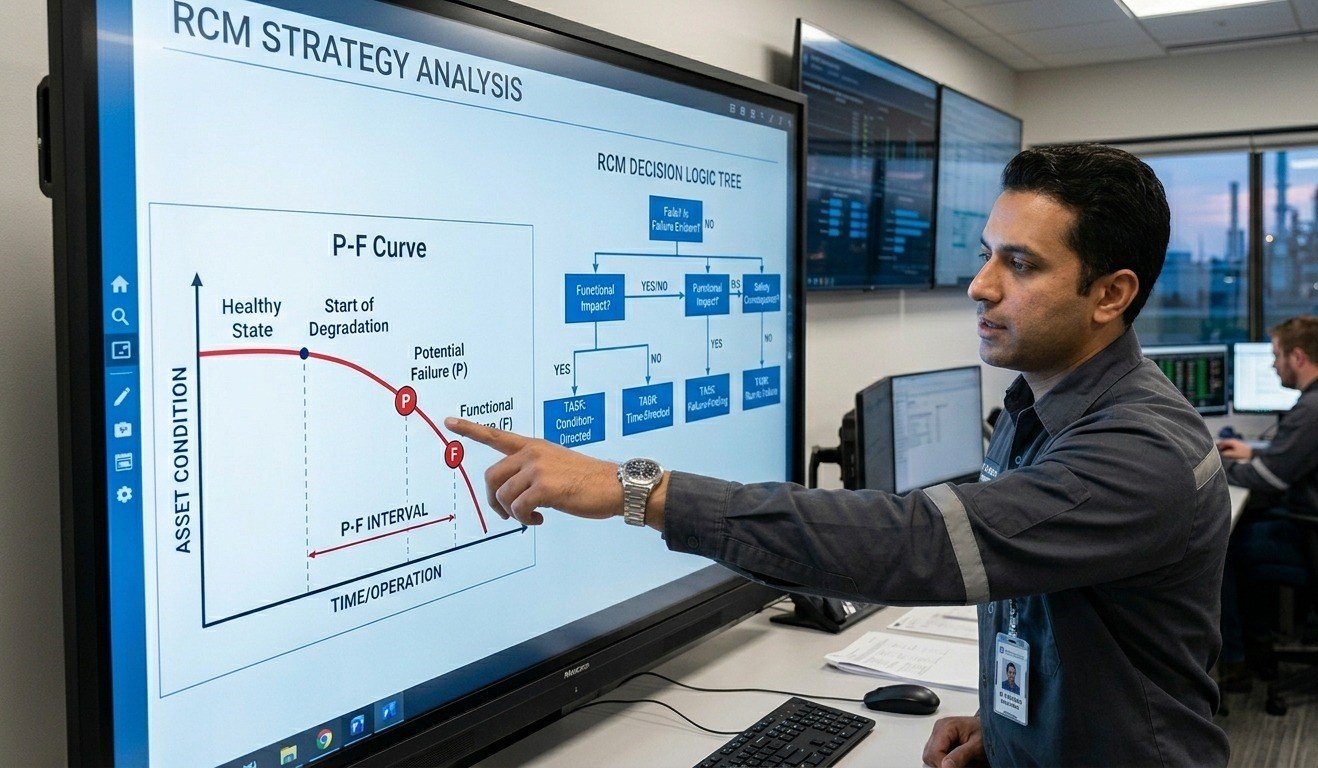
One of the biggest mistakes in industrial plants is applying rigid “Preventive Maintenance” (PM) schedules to all equipment. This leads to a massive waste of time and spare parts, and can sometimes introduce failures that wouldn’t have happened otherwise! The practical solution to this is Reliability-Centered Maintenance (RCM).
What is RCM?
RCM is a systematic engineering methodology used to determine the best maintenance strategy for any physical asset (whether it’s preventive, predictive, or even run-to-failure) based on the asset’s criticality and the consequences of its failure.
The 7 Core Questions of RCM:
To successfully apply this methodology, the reliability team must answer a logical sequence of seven questions for each asset:
What is the asset’s function and its desired performance standards?
In what ways can it fail to fulfill its functions (Functional Failures)?
What causes each functional failure (Failure Modes)?
What happens when each failure occurs (Failure Effects)?
In what way does each failure matter (Consequences on safety, environment, or production)?
What proactive tasks can be done to predict or prevent the failure?
What default actions should be taken if a suitable proactive task cannot be found?
Conclusion:
Implementing RCM doesn’t just mean reducing downtime; it means directing your maintenance efforts and budget exactly where they will achieve the highest reliability and safety for the plant.
Train your decision-making logic with our free RCM practice challenges on Reliability Path!
tarek.eltabee-9578
good
CMRP Certification Salary: Proven Earnings Guide 2026
[…] Specifically, the CMRP accelerates advancement at every level because it signals validated competence to employers. Furthermore, the credential is often a prerequisite for senior reliability roles. Therefore, earning the CMRP early in your career compounds the salary benefit over decades. For the foundational methodology, see our RCM analysis guide. […]